Sunday, 5 June 2016

Unit 2 Outcome 1 Programming

Here are some further reading on Hardware and Software

CPU types - RISC (Reduced instruction set computer) and CISC(Complex instruction set computer) are the types of instruction set for the processors.  


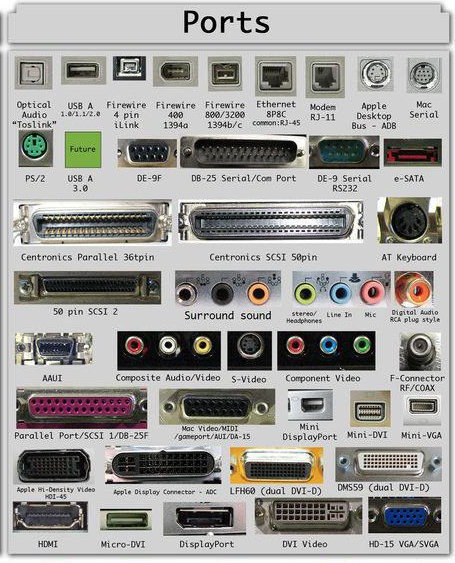
Types of ports:
http://eleele.persiangig.com/ELEELE/89-Files/Ports.jpg


Tuesday, 24 May 2016

Thursday, 19 May 2016

Design Choices

Our website has working links that lead to every page no matter where the user is, it will also be able to sense the type of device that the is be used to view the website and scale and move elements of the page to better suit specific devices.

Smartphones users will be able to navigate through pages by tapping the links in the menu, we will also include links to the the sub-topics within the relevant pages. Each link is labelled in a way that clearly describes the contents of the page.

We have decided not to use symbolic icons in place of text to reinforce the simplicity of our website, as such, we have made sure that each page is identical in colour and structure to ensure that users are not confused.

The only information contained in the website are facts and research that inform users of our reliance on technology and relevant issues.Following the 'F' writing convention ensures that users will not have trouble finding our information or where they should start reading.

Our limited colour palette and font gives our website a sense of professionalism and makes users more likely to consider our information rather than ignore it. The use of white space ensures that the contents of each page is not cluttered and illegible.

We decided on a landscape orientation as a portrait page would stretch the information down the page, making users have to scroll down for long periods of time. We made sure that the content on the homepage was minimal or brief in comparison to the available space on the page to ensure that we could add extra content or media later on to catch the user's eye.

~Bunmi, Rahaul, Jackson

Wednesday, 18 May 2016

Salting

Check out this link and find out more about "Salting":
http://www.msn.com/en-au/money/company-news/millions-of-linkedin-ids-for-sale/ar-BBtcVl9

Short Report

We decided to include the research we conducted as well as some our primary data to better inform users about technology reliance and illustrate the presence of technology in our lives. Some of the primary and secondary data was removed as it was descriptive rather than informative.  For example, we did not include what the survey participants primarily used technology for.

We’ve arranged the menu by topic and utilized simple drop down sub-menus to make it easier for users to choose whether they want to learn about a specific part of technology reliance or it’s issues, such as the stakeholders in technology reliance or the impacts of our reliance on technology and navigate back to the homepage swiftly at anytime.

Our website has an about us page which will have contact details so that users can email any questions or suggestions they might have to us, which will provide room for more information to be included and enables us to identify when to update our website if it turns out the data is inaccurate or outdated.

Due to the fact that the information takes up small portions of the screen, additional information can be added without the need to scroll down for long periods of time. In the event that we have an excess of information on one page, it can be broken down into separate topics on the menu bar or the fill down sub menus as additional pages.  

~Bunmi, Rahul, Jackson

Tuesday, 17 May 2016

PART A: DESIGN

Both groups need to return to the decisions you made in PART A: Design and Justify your choices.

READ pp181 - 195

One poster per group - Post your Design layout & Site Map and write a justification for your decisions including all the features listed below:

Functionality:

  • Usability
  • Robustness
  • Flexibility
  • Scale ability
  • Ease of Use

Accesssibility

  • Error tolerance
  • Navigation
  • Meaning
  • Comprehension
  • Consistency
  • Appropriateness and Relevance
Appearance
  • Alignment
  • repetition
  • Font Selection
  • Contrast
  • Colour 
  • Space
  • Conventions
  • Proportions
  • Orientation